Rest is not a weakness but part of your training. But how many rest days do you actually need to stay fit and get stronger? Bicycling put it all together. The short answer: for most cyclists, one full rest day a week is a good basis. If you train hard, have a lot of stress or notice your performance and motivation dropping, two rest days are often wiser.
As a starting point by age: from 18 to 35, one rest day a week; from 36 to 50, one, sometimes two; from 51 to 65, one or two; and over 65, one or two, depending on how hard you train. That is not a law. Sleep, nutrition, stress and training experience determine at least as much how quickly you recover.
So age is not everything. In research, the power of older and younger trained cyclists recovered equally fast after a hard interval session. The older riders did feel more tired and less motivated after 48 hours. A 55-year-old who sleeps and eats well can sometimes recover better than a 28-year-old who sleeps little and stacks too many hard sessions in a row.
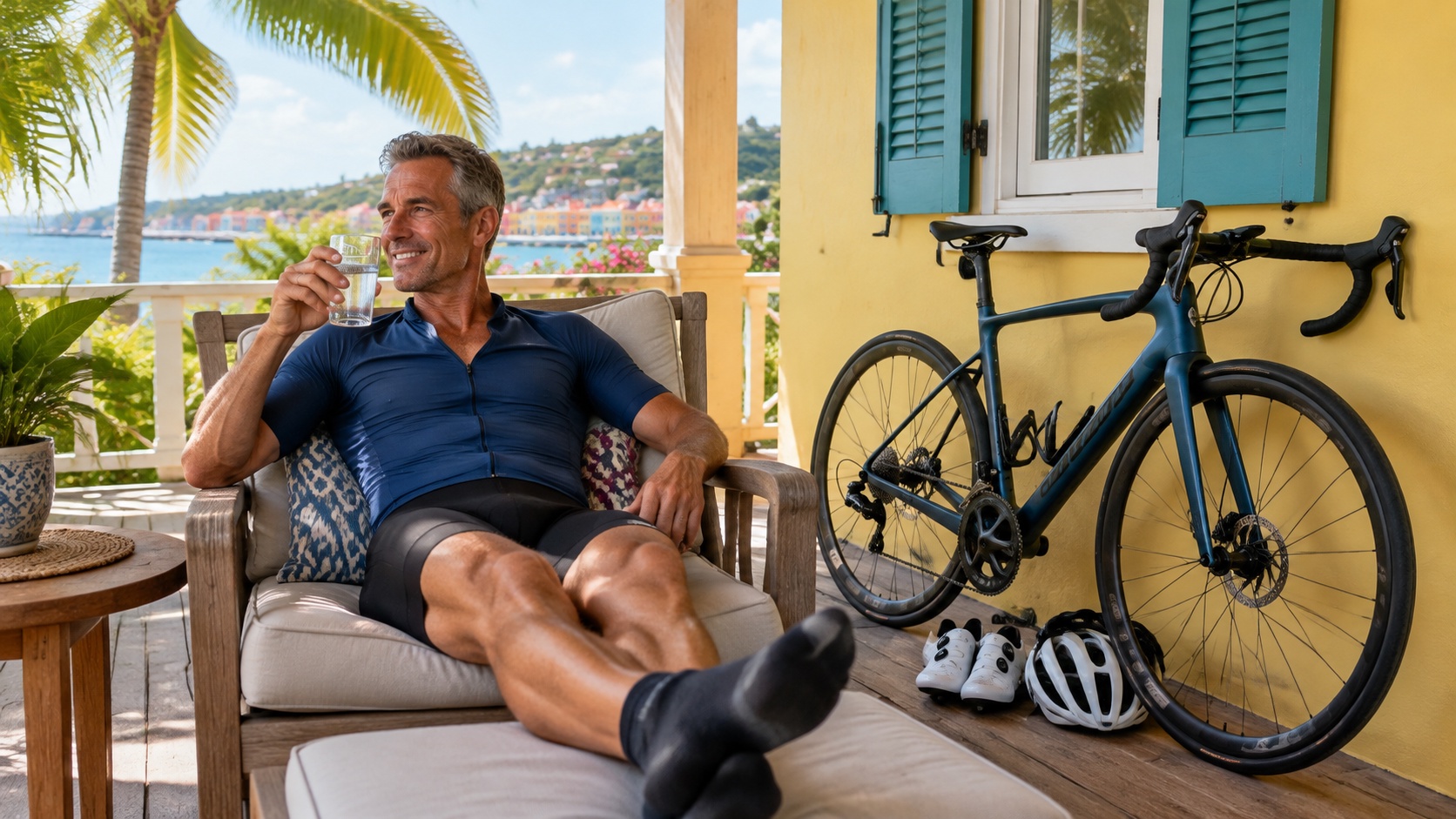
A rest day doesn't have to be a day on the sofa. A short, very easy recovery ride or a walk is fine too, as long as it stays light: no intervals, no climbing and nothing that disrupts your next training session.
Signs that you need more rest: your power or speed drops for no clear reason, your muscles stay sore, your resting heart rate is off, you sleep badly, you get ill more often or you feel less like riding. Irritability and trouble concentrating count too.
Plan your week smartly: don't put hard sessions on consecutive days, and after a long or hard ride keep at least one easy day. Sleep seven to nine hours a night and keep eating and drinking well on a rest day, because that is exactly when your body builds up. Do you have chest pain, are you unusually short of breath or does your performance suddenly collapse? Then stop and seek medical advice.
In Curaçao we often ride early in the morning, in the heat and several days in a row. That is exactly when a rest day is worth its weight in gold: drink extra water and give your body time to come back stronger. Read the full article on Bicycling via the button below.